
Collaborate with An-Najah National University Team in Horizon Europe
At An-Najah National University, we aspire to be at the forefront of innovative breakthroughs across multiple fields as we engage with Horizon Europe.
Innovative Health and Pharmaceutical Solutions

3D printing for medical applications
💊3D printing for medical applications
Research Lead: Bahaa Shaqour
Field: Pharmaceutical Technology & Additive Manufacturing
Overview:
This innovative research focuses on utilizing 3D printing technologies for the fabrication of personalized and patient specific medical devices and drug delivery systems.
Impact:
-
Exploring innovative personalized medicine solutions.
-
Expanding the capabilities of extrusion based 3D printing technologies
-
Strengthening local pharmaceutical R&D capacity
TRL: 2–4
Artificial intelligence-based solutions in medical applications
🧠Artificial intelligence-based solutions in medical applications
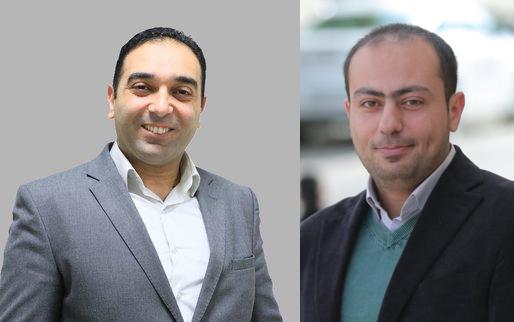
Research Leads: Naim Kittana&Hamed Abdelhaq
Field: Artificial Intelligence in Medicine
Overview:
The integration of Artificial Intelligence (AI) into medical research, with a focus on developing innovative applications that bridge AI technologies and medical sciences.
Impact:
-
Accelerated & cost-effective drug discovery
-
Advancement of precision medicine & healthcare provision
-
Strengthened innovation & advancing translational medicine
TRL: 2
Innovative Sustainable Energy Solutions

Empowering Solar Energy Solutions
☀️SolenX 2.0 – Solar Energy Aid Box
Research Lead: Tamer Khatib
Field: Renewable Energy
Overview:
SolenX 2.0 builds on the first-generation solar-powered aid box designed for underserved Palestinian families. The system provides electricity for essential needs and now includes an e-cooking port for multi-cookers.
Impact:
-
Reliable off-grid power for families in remote areas
-
Affordable manufacturing (~$416 per unit)
-
Supports healthcare by powering small fridges for insulin
TRL: 4 (proven theory with publications)

Innovative Eco-Friendly Housing Solutions
🌍IWAN – Smart Sustainable Homes for Palestine
Research Lead: Abdelhaleem Khader & Alaeddin Khader
Field: Environmental Engineering & AI
Overview:
IWAN is a digital service that uses low-cost sensors and AI to assess existing buildings, providing recommendations to reduce energy and water consumption and improve indoor air quality.
Impact:
-
Reduce greenhouse gas emissions from homes in Palestine
-
Support homeowners, lending agencies, and government decision-making
-
Encourage green entrepreneurship and sustainable housing
TRL: 2

3D-Printed Drug Delivery
🧬
Neurochemical Approaches for Neurological Diseases
Research Lead: Mohammad Qneibi
Field: Neurochemistry & Biochemistry
Overview:
Research into novel biochemical and electrophysiological approaches for treating neurological disorders.
Impact:
-
Pioneering new methods for diseases with limited therapies
-
Builds international research collaborations (e.g., Turkey)
-
Expands Palestinian expertise in brain health research
TRL: 2

 Postoperative symptoms prevention: An Najah research Profile
Research Lead: Dr. Aidah Abu Elsoud Alkaissi
Field: Clinical Research—Anesthesia & Nursing
Overview:
We focus on preventing key postoperative symptoms—namely nausea, vomiting, and pain—using:
Pharmacological strategies (antiemetics, multimodal analgesia)
Non-pharmacological approaches like acupressure and virtual reality distraction
Impact:
Reduced incidence and severity of postoperative symptoms
Decreased need for rescue medications
Increased patient comfort and safety in recovery
Strengthened evidence-based anesthesia and nursing practices
TRL: 4 — Validated in clinical research settings
Why Collaborate With Us?
Existing infrastructure & teams with experience in day-case surgery and symptom control
Clear research gaps where innovation (especially in non-pharmacological adjuncts) can make a big difference
Committed to publishing, shared resources, and partnership

Nose-to-Brain Systems
🚑Rapid Nasal Drug Delivery for Emergency Medicine
Research Lead: Hiba Natsheh
Field: Neurosciences & Pharmaceutics
Overview:
Design of nano-formulations for nasal delivery of opioids to the brain for rapid pain relief in emergencies.
Impact:
-
Fast, non-invasive treatment in emergency care
-
Vital in areas with limited access to injections or advanced medical tools
-
Strong commercialization potential with industry partners
TRL: 1–2
Metal Additive Manufacturing: Monitoring and Control
⚙️Metal Additive Manufacturing: Monitoring and Control
Research Lead: Mohammad Abuabiah & team
Field: Mechatronics, Metal Additive Manufacturing, Smart Manufacturing
Overview:
Advancing Laser Wire-Feed Additive Manufacturing (LWAM) by developing real-time monitoring and closed-loop control strategies to improve process stability and part quality. It builds on the results of BALSAM (MSCA-PF, Horizon Europe, No. 101064640) and is further extended in METALINK (TARGET-X, Horizon Europe), in collaboration with the University of Luxembourg and Fraunhofer IPT (Germany). 5G technology is further leveraged as a key enabler for data-driven monitoring, control, and remote process supervision.
Impact:
-
Robust in-situ quality assurance through sensor-driven monitoring
-
Closed-loop control for accurate geometry and defect-free parts
-
Integration of LWAM into Industry 4.0 production line
TRL: 5
Innovative Solutions for Environmental Sustainability and Waste Minimization

Innovative Wastewater Treatment Method
💧Treatment with Nanoparticle Technologies
Research Lead: Amjad El-Qanni with an interdisciplinary team
Field: Chemical Engineering, Thermodynamics, Nanotechnology, Wastewater, Energy and Environment
Overview:
Dr. El-Qanni pioneers the use of magnetic nanoparticles integrated with advanced oxidation processes (AOPs) and other conventional processes for the treatment of industrial wastewater. His research targets cost-effective, scalable, and sustainable purification methods, directly addressing one of Palestine’s most urgent environmental and water security challenges..
Impact:
-
Mitigates severe industrial and municipal water pollution under crisis conditions.
-
Introduces adaptable solutions for both developed and resource-constrained settings.
-
Aligns with UN Sustainable Development Goals (SDGs 6, 9, 12, and 13).
- Supports regional resilience by advancing circular water reuse models.
TRL: 2–5 (proof-of-concept demonstrated; progressing toward pilot and pre-commercial scale-up).

Innovative Photochemical Solutions for Pesticide Removal
🌱Photocatalytic Removal of Pesticides
Research Lead: Ismail Badran & Interdisciplinary team
Field: Environmental Chemistry, Nanotechnology, Agriculture
Overview:
A new photocatalytic system using TiO₂-based catalysts under visible light to degrade pesticide pollutants.
Impact:
-
Removes persistent and harmful pesticides from wastewater
-
Improves food safety and environmental health in Palestine
-
Provides scalable solutions for agriculture-dependent economies
TRL: 3–4 (proof of concept tested in labs)

Field: Educational Technology, Artificial Intelligence in Education (AIED), Higher Education Pedagogy, Assessment Innovation, Interdisciplinary Studies
Research Lead: Zuheir Najee Khlaif (with Allam Mousa)
Field: Educational Technology, Artificial Intelligence in Education (AIED), Higher Education Pedagogy, Assessment Innovation, Interdisciplinary Studies
Overview:
Dr. Khlaif is developing an AI-enhanced, ethical, and AI-resistant assessment framework tailored for higher education in Palestine and the Arab region. The framework leverages adaptive technologies, AI-assisted task design, and transparent rubrics to safeguard fairness, authenticity, and academic integrity while fostering critical thinking and creativity. Rooted in the Palestinian educational context, it addresses constraints of limited resources and digital inequality, while remaining scalable regionally and globally.
Impact:
-
Provides trustworthy and equitable assessments resilient to generative AI misuse.
-
Promotes critical thinking, creativity, and student responsibility.
-
Supports equity and digital capacity-building in Palestine and the Arab region.
-
Aligns with Horizon Europe priorities on digital innovation and inclusivity.
TRL: 4–5 (validated through workshops with 300+ faculty and pilot studies; progressing toward TRL 6–7 with digital prototyping and regional trials).
Research Lead: Hala Montaser Bal’awi
Field: Law, Artificial Intelligence, Legal Technology, Professional and Academic Legal Studies
Overview:
Hala Bal’awi is leading the formation of a specialized legal research team of professionals and academics from Palestine and the region, focusing on the integration of artificial intelligence in the legal sector. Building on her distinction as a graduate of the Faculty of Law – An-Najah National University, her work explores the intersection of legal expertise and technological innovation to modernize the practice of law and legal education. The initiative aims to develop advanced AI-powered tools to support legal firms, with a particular focus on corporate law.
Impact:
-
Establishes the first specialized legal reference book on AI applications in the Palestinian and regional legal sectors.
-
Equips the legal profession with innovative AI tools for enhanced efficiency and transparency.
-
Strengthens the competitiveness of legal firms, particularly in corporate practice.
-
Positions Palestine as a contributor to regional discourse on legal technology.
Stage: Currently in the team formation and task distribution phase, preparing for research and publication.
Research Lead: Sajeda Mohammad Hasan
Faculty: Engineering and Information Technology
Field: Artificial Intelligence, Educational Technology, Robotics, STEM Education
Overview:
Sajeda Hasan leads an interdisciplinary team of engineers, AI specialists, business professionals, and digital marketers, focusing on integrating AI and robotics into education and business transformation. The innovation introduces a dual approach: equipping children with programming, robotics, and future skills, while supporting companies in digital transformation through robotics and automation solutions. Over the past three years, the project has successfully trained children in a specialized programming language in collaboration with Hello World (Jordan), and recently secured an exclusive agency with Quill to introduce robots in both education and business automation across Palestine.
Impact:
-
Provides children and youth with hands-on experience in programming, robotics, and AI.
-
Supports businesses in adopting robotics for automation and process optimization.
-
Strengthens Palestine’s role in global EdTech and digital transformation initiatives.
-
First company in Palestine with an exclusive robotics agency (Quill).
TRL: 5 (validated in relevant educational and business environments; preparing for broader deployment).
Potential Collaborations:
-
Academic partners: research institutes and universities in robotics, AI, and STEM.
-
Industry partners: EdTech and robotics companies, with existing ties to Hello World (Jordan) and Quill.
Expected Benefits of Collaboration:
-
Resources: Robotics hardware, software, and learning platforms.
-
Expertise: Technical guidance, curriculum development, and training support.
-
Funding: Support for scaling implementation and expanding impact.
Intellectual Property:
Original methods in customer acquisition and AI-powered teaching approaches. Exclusive rights with Quill for robotics in Palestine.

Research Lead: Anas Toma
Faculty: Electrical and Computer Engineering
Field: Artificial Intelligence, Computer Vision, Machine Learning
Research Team: Anas Toma (AI & Computer Vision), Asmaa Qaddumi (Vision Rehabilitation – Applied Medical Sciences)
Overview:
The project introduces a Smart Indoor Localization System at An-Najah National University to support seamless navigation within faculty buildings. By integrating advanced positioning technologies with a user-friendly mobile application, the system offers step-by-step guidance to classrooms, offices, and facilities. Accessibility features such as audio directions and haptic feedback enable individuals with disabilities to navigate the campus independently. This innovation advances the university’s transformation into a smart, inclusive campus, aligning with global trends in digital accessibility and smart infrastructure.
Impact:
-
Enhances inclusivity and independence for students and visitors with disabilities.
-
Improves navigation efficiency for the entire university community.
-
Positions An-Najah University as a leader in smart campus innovation in the region.
-
Contributes to global best practices in digital accessibility and campus modernization.
TRL: Currently positioned at TRL 4–5 (concept validated with prototypes and early tests; preparing for pilot implementation at university level).
Potential Collaborations:
-
Technical partners: Providers of indoor localization equipment, software platforms, and integration tools.
-
Academic & accessibility experts: Guidance on usability, universal design, and disability inclusion.
-
Funding collaborators: Support for hardware procurement, software development, and pilot implementation.
Expected Benefits of Collaboration:
-
Access to specialized technologies and integration capabilities.
-
Expertise in accessibility design and AI-driven navigation.
-
Funding to ensure scalability, sustainability, and regional adoption.
Intellectual Property:
Original innovation, not yet registered; developed at An-Najah National University and recognized academically.

Research Lead: Mohammad Altamimi
Faculty: Agriculture and Veterinary Medicine
Field: Human Gut Microbiome and Health
Research Team & Expertise: An-Najah National University (Palestine) in collaboration with University of Federico II (Italy), with planned partnerships with pharmaceutical companies and hospitals.
Overview:
Dr. Altamimi’s research focuses on the human gut microbiome as both a key driver of chronic diseases (diabetes, cardiovascular disease, metabolic syndrome) and a marker of overall health. The project investigates how microbial groups influence health outcomes, linking lifestyle factors (diet, sleep, physical activity) with disease progression. By combining microbiome screening, wearable sensors, and AI-driven data analysis, the innovation aims to provide real-time insights, early diagnosis tools (e.g., colon cancer), and personalized dietary and lifestyle plans to improve patient health.
Impact:
-
Builds the first large-scale dataset on Palestinian gut microbiome.
-
Provides early diagnostic tools for chronic diseases and colon cancer.
-
Generates personalized health and nutrition plans to support microbiome health.
-
Integrates AI and wearable sensors for real-time monitoring and predictive insights.
TRL: 3–4 (concept defined, methodology developed, researchers ready to start; moving toward pilot testing with hospitals and partners).
Potential Collaborations:
-
Academic: University of Federico II (expertise in microbiome studies).
-
Industry: Pharmaceutical companies (funding, lab resources).
-
Healthcare: Hospitals (patient data collection, validation).
Expected Benefits of Collaboration:
-
Resources: Access to lab facilities, wearable devices, and bioinformatics platforms.
-
Expertise: International knowledge exchange in microbiome and health sciences.
-
Funding: Support for large-scale testing, data collection, and platform development.
Intellectual Property:
Original concept; not yet registered or patented.

Research Lead: Ihab Hisham Alsurakji
Faculty: Engineering
Field: Thermodynamics, Multiphase Flow, Drag-Reducing Additives, Energy Management, Wastewater Treatment
Research Team & Expertise: Dr. Amjad El-Qanni, Dr. Mohammad Abuabiah
Overview:
The project targets the treatment of industrial organic wastewater effluents, a critical environmental and public health challenge. By integrating magnetic nanoparticles with advanced oxidation processes (AOPs), the study seeks to develop a continuous wastewater treatment system capable of reducing pollutants efficiently. Magnetic nanoparticles offer high sorption affinity and photocatalytic activity, making them ideal for improving AOP effectiveness. This innovation aims to create scalable, sustainable, and energy-efficient wastewater solutions for industrial applications.
Impact:
-
Provides an advanced, eco-friendly solution for industrial wastewater treatment.
-
Reduces environmental damage and health hazards from untreated effluents.
-
Advances the use of nanotechnology in sustainable water management.
-
Supports regional resilience in water and energy sectors.
TRL: 2–5 (proof-of-concept demonstrated); progressing toward TRL 5–8 through this project (pilot validation to pre-commercial scale).
Resources & Funding:
-
Resources: Access to advanced laboratory facilities, magnetic nanoparticles, and AOP reactors.
-
Funding Needs: Support for pilot implementation, scaling, and industrial integration.
Intellectual Property:
Original concept; not yet formally registered.
Innovative Solutions for Global Challenges
Our Key Innovations
Advanced Wastewater Treatment
Utilizing cutting-edge technologies like magnetic nanoparticles and advanced oxidation processes for efficient wastewater purification.
Photocatalytic Pesticide Removal
Employing TiO₂ catalysts to remove harmful pesticides under visible light, ensuring safer water resources.
Sustainable Agriculture Practices
Implementing eco-friendly farming techniques to enhance crop resilience and reduce chemical dependency.
Solar-Powered Aid Solutions
Developing affordable solar-powered systems to support underserved communities with essential utilities.
Nose-to-Brain Drug Delivery
Innovative systems for direct delivery of medications to the brain, improving treatment for neurological conditions.
3D-Printed Drug Delivery Systems
Personalizing medicine with 3D-printed microneedles for precise and effective drug administration.
Neurochemical Disease Approaches
Exploring novel neurochemical strategies to tackle complex neurological diseases.
Multidisciplinary Research Teams
Collaborative teams with diverse expertise, driving forward groundbreaking research and innovation.
Explore Our Innovations
Our center is at the forefront of pioneering solutions, addressing critical global issues through innovation and collaboration. Our initiatives span across various sectors, including health, renewable energy, and agriculture, aiming to create sustainable impacts worldwide.
01
Water & Environment
02
Food Security & Agriculture
03
Health & Pharmaceuticals
04
Renewable Energy
Our Mission and History
🌐 Horizon Europe Clusters of Interest
- Cluster 1 – Health: Fostering innovation in healthcare and well-being
- Cluster 2 – Culture, Creativity and Inclusive Society: Promoting cultural heritage and social inclusion
- Cluster 3 – Civil Security for Society: Enhancing disaster resilience and cybersecurity
- Cluster 4 – Digital, Industry and Space: Advancing digital technologies and industrial leadership
- Cluster 5 – Climate, Energy and Mobility: Driving sustainable energy solutions and mobility
- Cluster 6 – Food, Bioeconomy, Natural Resources, Agriculture and Environment: Ensuring food security and sustainable resource management
- Cluster 7 – Inclusive and Secure Societies: Building resilient and inclusive communities
- Cluster 8 – Research Infrastructures: Supporting cutting-edge research facilities
- Cluster 9 – Widening Participation and Strengthening the European Research Area: Enhancing research collaboration across Europe
- Cluster 10 – European Innovation Ecosystems: Boosting innovation and competitiveness
- Cluster 11 – Health and Well-being: Addressing public health challenges and promoting well-being
- Cluster 12 – Green Deal: Tackling climate change and promoting sustainable development
- Cluster 13 – Digital Transformation: Facilitating digital innovation and transformation
- Cluster 14 – Energy Transition: Supporting the shift to renewable energy sources
- Cluster 15 – Smart Mobility: Innovating transportation systems for the future
- Cluster 16 – Biodiversity and Ecosystem Services: Preserving natural habitats and biodiversity
- Cluster 17 – Circular Economy: Promoting sustainable production and consumption
- Cluster 18 – Clean Water and Sanitation: Ensuring access to clean water and sanitation
Join Us in Shaping a Sustainable Future
At the International Grants and Projects Center, we believe in the power of collaboration to drive meaningful change. By partnering with us, you can contribute to groundbreaking projects that align with Horizon Europe’s goals. Together, we can harness innovation to create a sustainable and prosperous future for all. We invite you to express your interest in joining our network of forward-thinking partners. Let’s work together to make a lasting impact.